

INTRODUCTION[1]
Consent is the dominant form of internet governance, pervading many global privacy and internet governance frameworks[2] and is a core tenet within philosophical foundations of privacy.[3] Scholars have described consent as the “lynchpin” of privacy law and the predominant internet governance tool[4] because it offers low-cost regulation.[5] Consent is regularly “acquired” through end-user-license-agreements (EULAs) (also sometimes referred to as end-user-service-agreements (EUSAs)), but many question whether this constitutes consent at all.[6] This is all too familiar. When visiting a website or signing up for a new online account, the “I agree” button on the pop-up privacy notice banner is practically begging to be pressed without second thought. Due to the difficulty of acquiring morally valid consent, some propose adopting weaker, less binding versions,[7] or tossing consent out altogether.[8]
We might consider the current regulatory landscape of internet governance as a dark forest through which we are blindly stumbling. Informed consent is a detour to a viewpoint where we see the pathway out, but are not yet on it ourselves. The focus on informed consent may impress upon us that the internet ought to be regulated, but we have not yet found the appropriate governance scheme to guide us through the dark woods. This paper touts regulating the internet as a public good as a potential correct path.
The purpose of this paper is to examine morally valid consent and propose an alternative public goods governance structure which better safeguards users’ fundamental interests. Section I discusses consent in the context of the internet, sketching a definition of consent, and comparing Tom Dougherty’s (2024) account of duress from social norms to current internet governance’s reliance on consent as its main governance structure. The comparison shows that the background conditions of the internet make it so that before you even click the “I agree” button, your consent is not morally valid, prompting a search for different governance structures. Moreover, the section describes consent’s inefficacy when applied at scale, reinforcing its pitfalls. Finally, I propose what I call Consent Federalism as a method of toeing the line between consent’s diminished utility at scale and respecting individual autonomy. Section II investigates the similarities between public goods and the internet and proposes what I call the Fundamental Interests Public Goods Argument. The internet fulfills criteria used to classify public goods, and consequently, the government is justified to provision or subsidize, protect, and maintain the internet to solve the market failures it induces upholding fundamental interests and relational equality.
I. CONSENT
Consent is an authorization to perform an action. Heidi Hurd describes consent as the “moral magic” that converts impermissible actions into permissible ones.[9] An assault transforms into a hug, a theft into borrowing, and a kidnapping into a scenic drive. Consent with respect to technology often concerns the control we have over the information,[10] both pre-existing and generated,[11] about ourselves, and empowers us to cede that control to others. This section aims to sketch a brief definition of consent, explain how duress can come from social norms, talk about consent’s failure when scaled up, and give a potential solution in what I call Consent Federalism.
Defining and satisfying consent
Morally valid consent (also known as informed consent) is consent that makes a moral difference in the permissibility of actions. Three constitutive elements are generally accepted as the necessary conditions of consent: understanding, voluntariness, and competence.[12] Understanding means to inform the consenter about the action to which they are consenting. Voluntariness guards against duress. Duress is when one must make a choice they do not want due to some external influence. Voluntariness, like understanding, comes in degrees, distinguishing persuasion from manipulation, and manipulation from coercion.[13] Competence regards whether individuals are able to make their own decisions. Competence is decision-relative, meaning there are a slew of scenarios where individuals are not well-positioned to give informed consent. Consequently, for consent to be morally valid, one must have a minimal understanding of the action they are consenting to, be free from duress, and be competent in a decisionally-relative manner.
The focus of this paper is primarily on the voluntariness condition of informed consent in the context of the internet. Even if it were possible to have perfect understanding and competence, antecedently, morally valid consent is invalidated because of the duress we experience from the social norms governing the internet. Consequently, we should seek alternative governance structures not primarily based in consent.
Duress from social norms
To stake the claim that we can experience duress from social norms, Tom Dougherty tells a story of a romantic date that results in a couple returning home and having sex.[14] Part way through foreplay, the woman, Rachel, decides she does not want to have sex at all, but given that she does not want to come off as rude, she relents and does. Dougherty claims the social norms, scripts, and stereotypes explain Rachel’s action.[15] In this way, social norms can be an indirect source of duress for the consent-giver. While it may be difficult to locate the source of duress since social norms arise organically and amorphously, they can still produce duress.
Dougherty’s account might extend to applications of the internet. Much of social interaction, work, play and entertainment, fitness, governmental notices, other vital forms of community-building, interest discovery, and civic engagement revolve around the use of the internet. The internet’s ubiquity and inextricable link to fundamental interests precludes refusing to use it (or requires a great deal of privilege). The monolithic platforms, or “gatekeepers,” that preside over a dominant majority of internet traffic have such undue influence over dictating the internet’s social norms that non-gatekeepers must conform to them, lest they be stamped down into digital obscurity by the gatekeepers’ algorithmic ranking and indexing. We ought to be able to interact within just social norms on the internet and not have to choose between compliance that sacrifices fundamental interests and noncompliance that generates an undue burden.
Consent’s impropriety at scale
Onora O’Neill (2004) claims the provision of public health cannot be made contingent on individual consent.[16] It would be far too onerous to individually survey and tailor air quality regulation, water treatment, or food safety based on individual consent. This is because collective needs are far more homogenized. Contrast the large-scale demands of the collective with the small-scale context of a patient-physician relationship, where individual consent can be obtained and individual autonomy respected because each person can voice their unique needs.
O’Neill’s indictment of consent’s purpose in public health has parallels to the internet. The internet is a large-scale project intertwined with many fundamental interests. It would be nigh impossible to tailor internet governance to the unique needs of each individual due to its scope and breadth. Regardless of individual preferences, everyone deserves an internet that is justly governed and does not compromise fundamental interests such as relationship building and interest cultivation by gamifying social interaction[17] or funneling individuals into homogenized interests based on recommendation algorithms.
Consent Federalism
Some may worry that my account above gestures towards eradicating consent in the context of the internet altogether. This would be the wrong conclusion. I am merely pointing out that many of the large-scale practices, such as placing the onus on individuals to be informed about thousands of privacy notices, determine whether they want their data to be used to train AI models, and decide whether to have personalized social media feeds, are decisions that should not be decided on the basis of individual consent. There are still small-scale scenarios in which individual consent is still a powerful tool. Consequently, we might want to adopt what I call Consent Federalism.[18]
Consent Federalism describes consent at the federal, community, and individual levels.[19] Federal consent, in the context of the internet, is not a formal acquisition, but tacitly permitting the government to regulate large-scale practices that affect fundamental interests. The government protecting fundamental interests is within the institutional practice of good government. Community-level online governance might require additional rules to which community members explicitly consent and democratically elect. Individual consent in Consent Federalism is analyzed between individuals, and are autonomous authorizations.[20] Under Consent Federalism, individual autonomy is preserved, but the reliance on satisfying individual consent for large-scale practices is minimized. This paves the way for heightened governmental regulation which better secures everyone’s fundamental interests.
II. PUBLIC GOODS
There are a variety of governance structures with their respective merits and pitfalls, however, the governance scheme of public goods is best positioned to govern goods and services that are linked with fundamental interests and induce market failures. Due to its permeation and proliferation within society, the internet fits the criteria of public goods and should be regulated accordingly. This allows governments to curb harmful business practices and eliminates the disproportionate reliance on individual consent. When the provision or subsidization, protection, and maintenance of certain goods squarely aligns with protecting everyone’s interests, it is appropriate to set aside satisfying individual consent.
Motivating that the internet is a public good
The internet comprises both physical infrastructure, such as telecom towers, fiber optic cables, etc., and digital infrastructure like the world wide web, various online software programs, and the networks people use to access the online world. The internet, like electricity, clean water, and air is both ubiquitous and pervades many fundamental interests, like autonomy, self-governance and civic participation, property, interest cultivation and recreation, and social interaction. Nearly everyone in the world today must operate with at least some interaction with the internet.
Comparing the internet to a digital town square is a favorite metaphor among many scholars,[21] but this analogy restricts its focus to only communication, whereas the internet encompasses much more. The arguments that follow can be applied to the public square analogy, but a more apt metaphor is a village well. The well provides water for the villagers, an essential and foundational need. The well also facilitates social interaction since villagers congregate around it, sharing information, news, gossip, and civic discourse. The well might be owned by a private entity, or freely governed. The villagers govern the well, whether privately owned or collectively managed, by ensuring sufficient access is maintained. In these ways, the village well metaphor better captures the constitutive elements of the internet and gestures towards its conception as a public good; more on this later. Of course, the internet’s scale is much larger than a single village so governing the utility is done not by local governors, but (inter)national governments. (Inter)National governments, should be responsible for promoting and safeguarding their people’s flourishing. This grounds the utility’s governance with the people’s power to self-govern.
If the internet operates in a regulatory vacuum or is severely under regulated, then various negative externalities at the individual, social, and political levels arise. At the individual level, we might worry about addiction,[22] negative body image,[23] and heightened anxiety,[24] among others. At the social level, we may worry about social isolation,[25] echo chambers,[26] radicalization,[27] and more. At the political level, we might worry namely about widespread mis- and disinformation,[28] increased political polarization,[29] and manipulating voter outcomes.[30] However, if the internet is properly secured against pernicious practices, the internet can help us achieve our goals, develop new interests, and build community.
Defining public goods
Public goods are certain kinds of collective goods everyone has.[31] There are both descriptive and normative definitions of public goods. A descriptive definition aims to explain exactly what something is in reality, whereas normative definitions tend to definite what something should be. More often, public goods are defined descriptively: they are the result of market failures and network effects. The normative view is certain goods confer sufficient social value and promote human flourishing, and as such, ought to be specially designated as a public good and should not be subject to market fluctuations.[32] Minimally, the internet fulfills the normative definition in that it is increasingly intertwined with human flourishing and confers a sufficient social value such that it ought to be designated as and regulated like a public good.
Historically, the two criteria that a good must fulfill to be considered a public good are nonrivalry and nonexcludability.[33], [34] Nonrivalry is when one person’s consumption does not significantly reduce the amount available for others. On the internet, one person’s consumption does not significantly reduce the amount of internet available for others. The second criteria, nonexcludability, means nobody can be reasonably excluded from enjoying the good once it is available. No one, in principle, is excluded from the internet. Nonexcludability does not disallow entrance barriers at all, the point is that each person who wishes to profit from the good can.
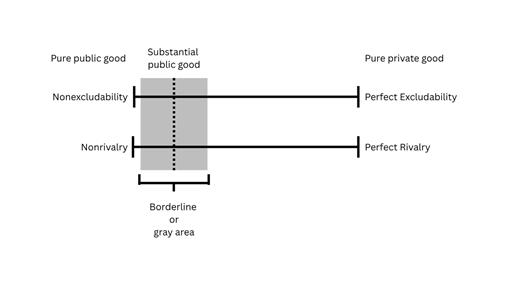
Fig. 1. Degrees of public and private goods[35]
Nonrival and nonexcludable goods induce market failure due to the free rider problem and network effects. When goods are available to all and costly to produce and maintain, free riders emerge who do not contribute to their maintenance.[36] Therefore, the government should step in and assist by either directly supplying or encouraging the provision of public goods in the interest of the public.
To take stock, the internet fits both the descriptive and normative definition of a public good. First, the internet is sufficiently nonrival since adding an additional user to the internet does not decrease the amount of internet available for others. Second, the internet is sufficiently nonexcludable, given that no one, in principle, is excluded from enjoying the good, presuming those wanting to participate have sufficient access. Third, the internet fulfills the normative definition of a public good in that it provides sufficient social value to be considered a necessity.
Government’s authority to intervene in public goods
When a problem is too complex to coordinate among many people and each person wants to be free of their burden of providing the solution, such as ensuring the internet remains a bastion of human flourishing, government should, if it can, come to the rescue.[37] The government can allocate collective resources, create and enforce obligations on its people, and should be responsive to its people’s needs. This differentiates the government from individuals who fail to individually solve collective problems, civic organizations and institutions who do not have the authority to create and enforce obligations on the populace, and businesses who are predominantly motivated by their financial success.
As the name implies, public goods supply a good; they provide an essential service. First, due to the free rider problem where not everyone contributes their fair share, the government should either directly supply or encourage the provisioning, protection and maintenance of public goods.[38] Second, protection is required because public goods might be destroyed or abused by nefarious actors. Third, public goods must be maintained to ensure they continue functioning well.
Governments have a responsibility to promote and safeguard their people’s flourishing in turn achieving relational equality and collective self-determination. Relational equality is an aspirational ideal in which we relate to one another as equals by rooting out unequal power advantages.[39] Governments, if they promote and safeguard people’s flourishing, help structure interactions with one another to realize relational equality. Relational equality’s demands bars considerations of unequal power, even if unequal power were to result in a better outcome. This is part of the rationale for why a benevolent dictator is not a just political arrangement. While the benevolent dictator may produce the same outcomes as other just processes, they fail to respect their subjects as equals by shutting them out from the deliberative process.
Fundamental Interests Public Goods Argument
Government’s power to create and enforce rules regarding public goods is limited by the commitment to relational equality whereas large online platforms are not currently subject to the same obligation. Consequently, we ought to regulate online platforms according to what I call the Fundamental Interests Public Goods Argument (FIPGA):[40]
- If adequately supplied or protected and maintained, public goods can promote the flourishing of fundamental interests.
- If market failures occur, then markets will undersupply or fail to adequately protect and maintain public goods.
- If public goods are undersupplied or inadequately protected and maintained, and the benefits of intervention significantly outweigh the costs of not intervening, governments can intervene to supply or protect and maintain public goods.
- Market failures do occur resulting in the undersupply or inadequate protection and maintenance of public goods, and the benefits of intervention significantly outweigh the costs of not intervening.
- Therefore, governments should intervene when market failures occur to supply or protect and maintain public goods thereby promoting the flourishing of fundamental interests.
Adhering to the FIPGA solves the five main problems plaguing internet governance. First, the internet’s free rider problem dissolves. No taxes are currently collected to provision, subsidize, protect or maintain a just internet. Instead, platforms self-regulate, employing nefarious business practices, as outlined above compromising autonomy, social interaction, etc. By intervening, governments remedy the free rider problem of a just internet.
Second, the FIPGA severely limits nefarious actors abusing the internet by satisfactorily safeguarding it. The government has the authority to prevent someone from poisoning other common pool resources, like a water reservoir, and similarly, the government is justified in implementing regulatory reforms to curb injurious actors abusing current internet governance.
Third, the FIPGA ensures that once procured, a just internet is maintained. Should governments intervene in the internet’s governance, necessary upkeep will be required to prevent a regression back to an unjust arrangement.
Fourth, the FIPGA helps achieve fundamental interests over non-fundamental interests. If transfigured from benign, one-off instances to standard business practices, these addictive habits can hamper our autonomy, narrow social interactions, inhibit the cultivation of new interests, and limit us from finding the best products.
Fifth and finally, the FIPGA restores relational equality. Under current internet governance, executives of large online platforms almost unilaterally control the rules to which their users must abide. Furthermore, the decision-makers in platforms are not elected members so the power each individual has to self-govern does not flow through to them as it does in a well-functioning government.
If the government were to impose regulations upon the internet customary to public goods, relational equality may be, at least partially, restored. Governments take greater strides towards realizing relational equality than pure corporate, authoritarian ownership because they commit themselves to the furtherance and protection of their people’s interests. The regulations the government imposes on the internet would then be justified in virtue of being a product of just processes.
CONCLUSION
In this paper I explained consent is the dominant form of internet governance. The consent obtained when using the internet, however, is morally invalid because we experience duress from the internet’s social norms. This encourages us to seek an alternative internet governance structure. I offered Consent Federalism to preserve some form of individual consent and autonomy at the community and individual level, allaying fears that my argument claims consent should be tossed out altogether. I then examined how the internet should be treated as a public good because it is both nonrival and nonexcludable, and is inseparably linked with fundamental interests. Therefore, the internet ought to be subject to more stringent governmental regulations. I laid out the Fundamental Interests Public Goods Argument which grounds the practice of the government provisioning or subsidizing, protecting, and maintaining public goods in securing and promoting human flourishing and relational equality.
One final, closing thought. We are blindly stumbling through the shadowed forest of internet governance, still unsure of which governance scheme will chart us through to safety. Should we set aside the false light of informed consent as our primary regulatory tool, instead heeding the signposts instructing us to treat and regulate the internet as a public good, we may successfully guide ourselves along the untrodden path and through the dark woods. Our fundamental interests, such as having the freedom to focus our attention to our goals, choose our own values, and achieve who we want to be might serve as our North Star which guides us through the dense thicket of internet governance, ushering us towards a brighter future, one where we flourish alongside the internet.
(Abbreviated) Bibliography
[1] N.B. Footnotes are taken from the long-form paper “Through the Dark Forest: An Alternative Internet Governance Structure.” For a full bibliography and a potential remedy for some confusion, please visit the full post here.
[2] See infra sec. II. See also California’s Consumer Protection Act (CCPA) (merely requiring business give notice to consumers when certain data is being collected, in essence leaving it up to individual choice whether to continue using the platform or not), California State Legislature (2018); and Australia’s Privacy and Other Legislation Amendment Act 2024 (No. 128, 2024) (requiring disclosures of automated decision-making). Parliament of the Commonwealth of Australia (2024).
[3] Marmor (2015); Marmor (2020); Thomson (1975) But see Bambauer (2024) (Arguing against control-based frameworks of privacy and instead offering a torts-based approach).
[4] Levinson and Pozen (2025).
[5] Corren (2023).
[6] Richards and Hartzog (2019); Solove (2023); Radin (2016); Litman-Navarro (2019); West (2019).
[7] Solove (2023).
[8] Khan and Pozen (2019).
[9] Hurd (1996).
[10] Marmor (2015) and derivatively see Thomson (1975).
[11] Examples of pre-existing data are birth dates, social security numbers, etc. We might consent to a tax-filing website to use that information to assist in digitally filing tax returns. Generated data concerns internet browser search history, online purchasing data, the data profiles accrued when using social media, etc. We might consent to that data being used to personalize recommendations or social media feeds.
[12] Dougherty (2024); Feinberg (1989c); O’Neill (2004); Faden et al. (1986); Beauchamp and Faden (1995); Liberto (2017); Dougherty (2020); Dougherty (2013).
[13] Faden et al. (1986) pp. 337-372.
[14] Dougherty (2024) p. 134.
[15] Ibid., p. 137.
[16] O’Neill (2004); O’Neill (2003).
[17] Nguyen (2021).
[18] I take inspiration from Thi Nguyen who argues for a similar structure of Value Federalism. Cf. Nguyen (2024).
[19] Faden et al. have similar distinctions between what they call sense1 and sense2 consents. I propose Consent Federalism to make clearer which sense covers different domains. Cf. Faden et al. (1986).
[20] Faden et al. refer to this kind of consent as sense1 consent. Ibid., p. 276.
[21] Howard (n.d.); Lazar (2025); Nunziato (2019).
[22] Bhargava and Velasquez (2021).
[23] Sanzari et al. (2023).
[24] Haidt (2024).
[25] Bonsaksen et al. (2023).
[26] Worsnip (n.d.).
[27] Hollewell and Longpré (2022).
[28] Broda and Strömbäck (2024); Worsnip (n.d.); Floridi (1996); Denniss and Lindberg (2025).
[29] Papakyriakopoulos (2022); Vasist et al. (2023).
[30] Zhuravskaya et al. (2020); Burkell and Regan (2019).
[31] There may be some individuals, like sovereign citizens, who would disagree, but this claim is usually true.
[32] Rahman (2017).
[33] Samuelson (1954); Pickhardt (2006); Kallhoff (2011); Anomaly (2015); Baltzly (2021).
[34] Angela Kallhoff offers additional criteria that help narrow to central public goods. The public good must be (1) tangible, not intangible—they have a physical existence; (2) final, not intermediate, distinguishing between institutions that facilitate public goods, but are not public goods themselves; and (3) regimes not items, which emphasizes the distinct modes of organization of a public good, rather than single instantiations, like a single street. The internet fulfills the three additional criteria and qualifies as a public good. Cf. Kallhoff (2011).
[35] I take inspiration from Faden and Beauchamp’s autonomy diagram. Cf. Faden et al. (1986).
[36] Baltzly (2021).
[37] Hume (n.d.) (Arguing in chapter 7 that magistrates can promote the interest more easily than individual persons). The language “should, if it can” will be implicit when later claiming a government should do something.
[38] Baltzly (2021).
[39] Viehoff (2014); Lazar (2024).
[40] I take inspiration from Baltzly’s Worthy Public Goods Argument. Cf. Baltzly (2021).


Wow. Very insightful and timely piece. Appreciate NNs kind effort to distill such unwieldy concepts so that us non-philosophers can appreciate these novel arguments and be included in the discussion. Looking forward to more of these.
Great adaptation of your thoughts!